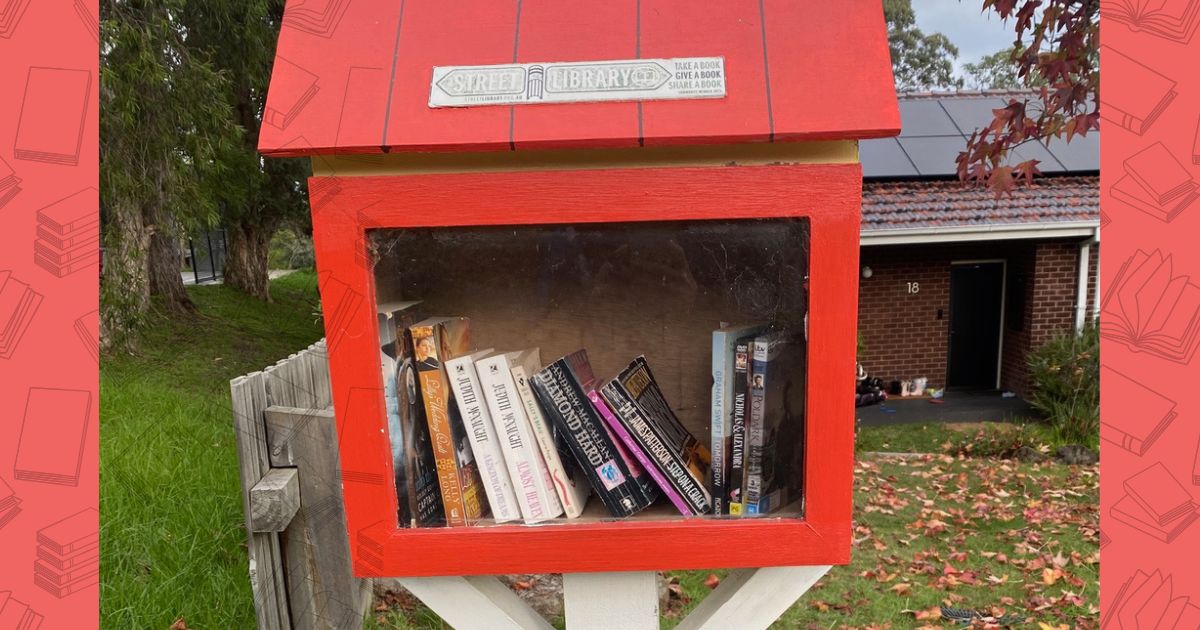
We had been walking past street libraries in Melbourne for years, but it wasn’t until we owned our own home that it occurred to us to install one. But, only a few months after moving in, I knew our home needed one.
There is something about them that just makes a neighbourhood feel a bit more like a neighbourhood. A small wooden box full of books, sitting at someone’s front fence, with an unspoken invitation to stop, browse, and take something home. Since installing it, we’ve had such wonderful feedback about ours, including new visitors to our home who’ve immediately jumped to the conclusion that we’re great people because we have one!
Were We a Good Location?
This was the first thing we thought about. A street library only works if people will actually walk past it, and not every street is the right fit.
For us, the case was pretty clear. We live next door to a park, which means a steady flow of dog walkers, families, and kids going back and forth throughout the day. There was no existing street library on our street, so we would not be doubling up on what the neighbourhood already had. And our front garden is visible and accessible from the footpath, which matters more than you might think.
If you are weighing up whether your place works, those are the things worth considering: foot traffic, what is already nearby, and whether your library will actually be reachable from the street.
Here is how we went about it, from deciding we were a good fit right through to getting ours installed and painted.
Where We Ordered Ours
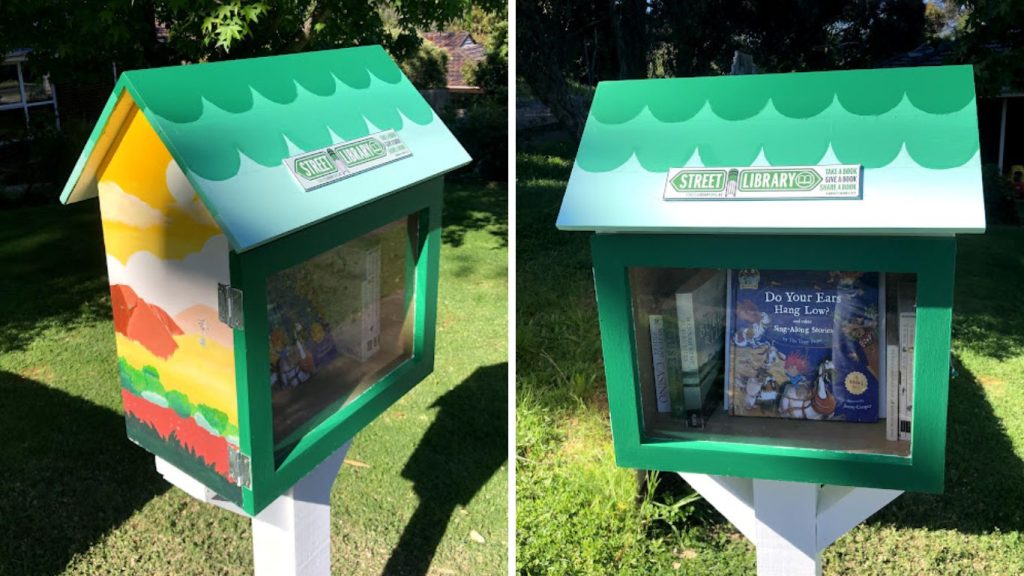
We ordered through Street Library Australia, a not-for-profit organisation that has been quietly building a community of book-sharers across the country since 2016. The idea is simple: a beautiful home for books, planted in your front yard, inviting your neighbours to share the joys of reading.
Their most popular model is called The Shed. It was designed by volunteers at their Erskineville headquarters and features marine quality plywood, high quality nickel plated steel fixings, and an easy-to-paint door with removable perspex. And here is the part worth knowing: the model is named after the Men’s Shed, because it was Men’s Shed volunteers who designed and organised the making of them. Every purchase supports Street Library Australia’s mission to reconnect communities through literacy across Australia.
They also sell a kit version if you want to build it yourself, and a range of other models. Check the Street Library Australia shop for current options and pricing.
One thing to note: the library arrives unpainted and must be protected with at least two coats of paint or varnish to ensure it lives a long and generous life. Which brings us to the fun part.
Installation
Our library did not come with a stand, which is common. We picked one up from Bunnings. From there, the process was straightforward, if a little physical:
- Choose your spot. Somewhere visible from the street, accessible from the footpath, and on your own property. A front garden with some foot traffic is ideal.
- Dig the hole. My partner handled this. The depth will depend on your stand, but a good rule of thumb for a timber or steel post is around 600mm deep, or roughly one-third of the post’s total length.
- Set it in concrete. We used a standard bagged concrete mix from Bunnings, poured dry into the hole around the post and then watered it in. Leave it 24 to 48 hours to fully cure before adding the library on top.
- Attach the library. Once the post was set and solid, we screwed the library directly onto the top of the stand.
Painting
This is where ours became ours. We bought exterior-grade acrylic paint online, which is what you need for anything that is going to live outside. Look for paints designed for outdoor timber with UV resistance and weatherproofing built in. Brands like Dulux Weathershield, Wattyl Solagard, and Haymes are worth looking at for their UV and moisture protection. For the finer detail work, artist-grade acrylic tubes give you more control over small areas.
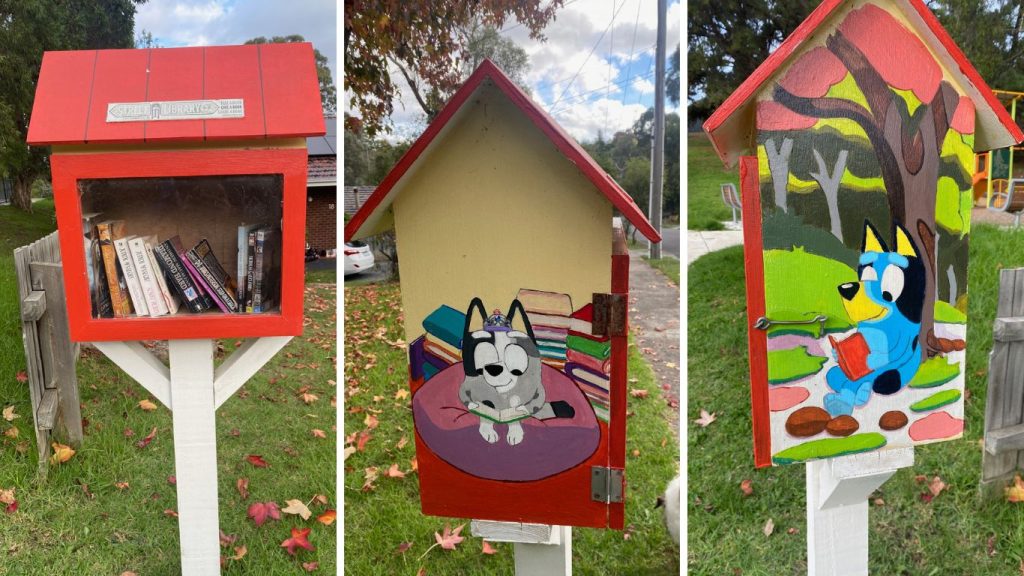
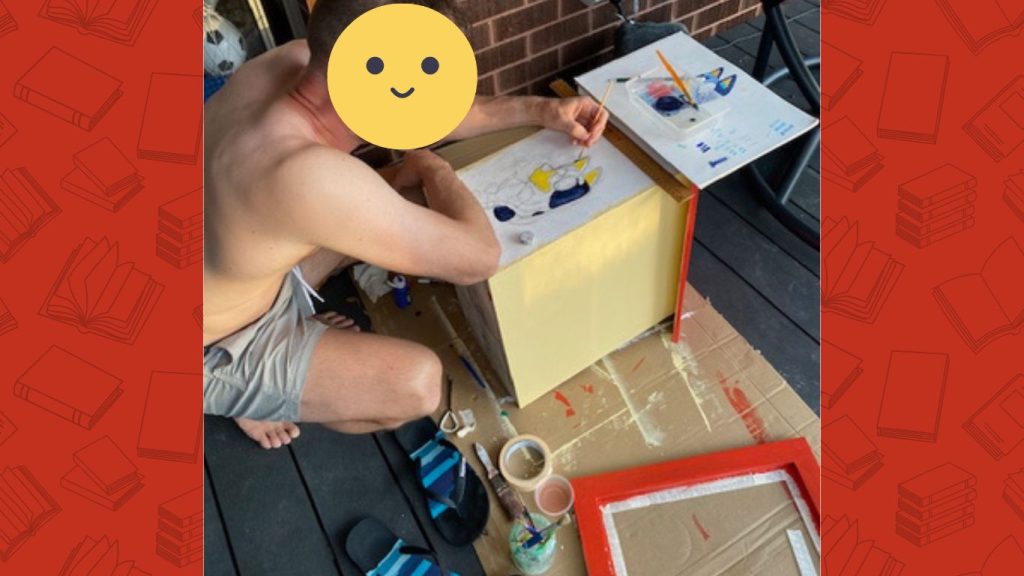
My partner sketched the whole design out in pencil before picking up a brush. Do not skip this step. It makes the painting process so much cleaner. He’s the artist, not me. Both of our designs have been his creations.
With kids at home, the theme was never really up for debate. Bluey. Our current design is in the main picture of this post, right at the top.
Our previous design was a nature scene with a style similar to The Koala Who Could by Rachel Bright and Jim Field, all soft greens and Australian animals. Bluey has since claimed the territory.
Registering Your Library
Once your library is up, you can register it on the Street Library Australia map. By registering, your library will appear on the Street Library Australia map, which is frequently updated and widely consulted by members of the community. Registration is free and optional, but it means neighbours and passersby can find you.
The ethos is simple: take a book, give a book, share a book. And, I do mean a book, WE DO NOT WANT old DVDs, wallets, and unplayable VHS tapes left by those that are too ashamed to throw their junk in their bin.
For reference, we have had our library since 2020, and it has been painted twice, once for the initial design and then a redesign a few years later. Our library is out in the elements, constantly hit by the sun and rain, so it takes a beating.
Street Libraries We Love Nearby
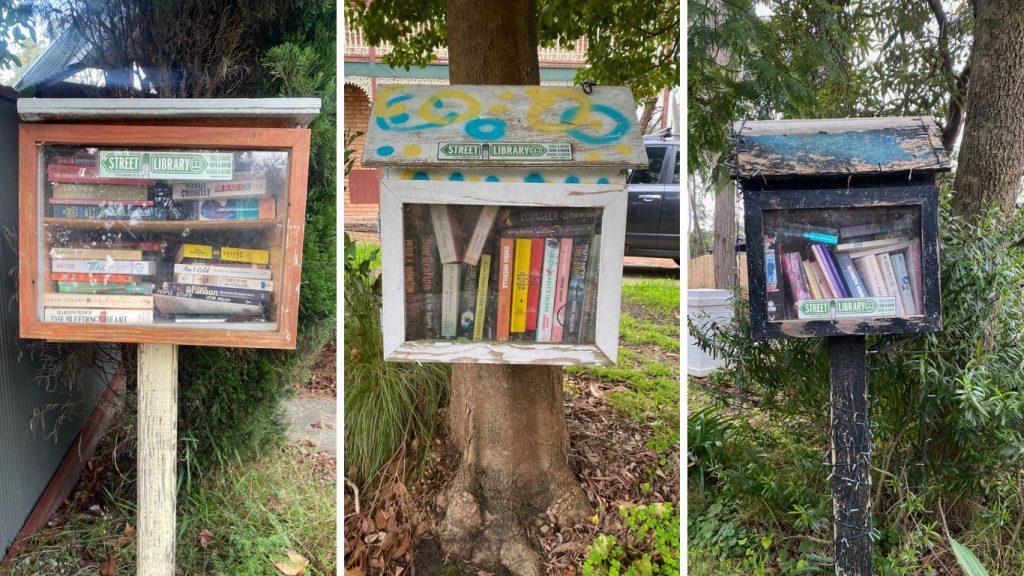
We are lucky to have a few great ones within walking distance. These are some that I pass on my run, dog walk, or the school run. As you can see, the middle one is attached to a tree, rather than a post. The one on the right is not concreted into the ground, but a moveable pot; Renter-friendly, I assume.